


Another doctor in our sHAI Group: Rebecca Wald defended her PhD and answered the question whether and how smart speakers are welcome in family life
- The sHAI Lab
- Sep 30, 2025
- 2 min read
Updated: Apr 2

On September 19th, 2025, Rebecca Wald successfully defended her dissertation at the University of Amsterdam. Her research addresses the question: To what extent do characteristics of parents with young children shape the deployment
of smart speakers in the home?
Smart speakers in the family home
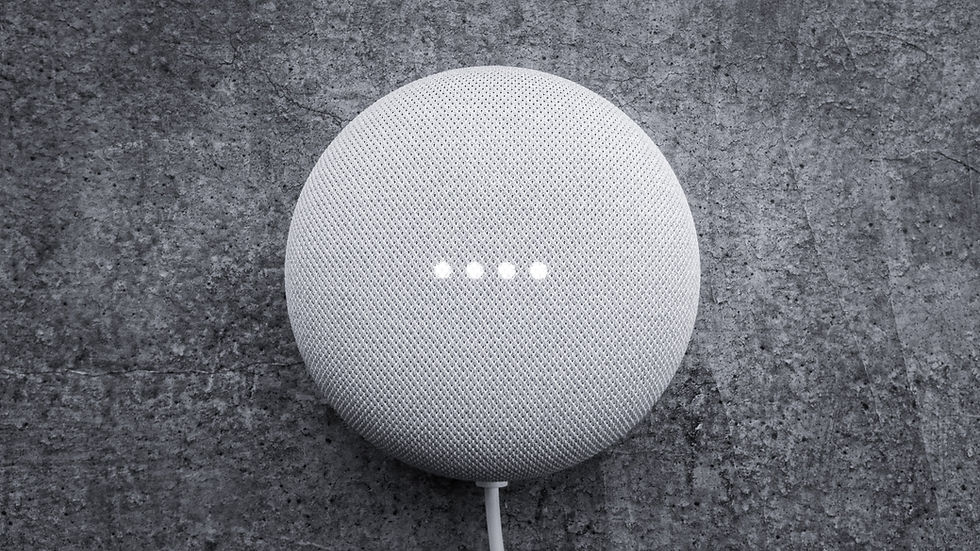
Rebecca’s work dives into the growing presence of smart speakers in family life. Think Alexa, Google Assistant, Siri and co. While these devices are becoming increasingly common, the reasons why parents choose to own and use them might vary widely. That said, her dissertation investigates not only if smart speakers are welcome in families, but also why and how they are used over time.
Who owns smart speakers and why?
In one of her four studies, Rebecca surveyed Dutch parents of children aged 3 to 8. She found that around 3 in 10 families already own a smart speaker. Interestingly, parents with higher trust in technology and lower internet skills were more likely to have one at home. Privacy concerns, often assumed to be a barrier, were shared by users and non-users. This suggests that concern alone, or rather the lack thereof, doesn’t explain adoption.
Different parents, same intentions
Her second study focused on families who already own a smart speaker. Rebecca identified four distinct types of parents highlighting how different families can be: Informed Laissez-faires, Uninformed Laissez-faires, Trusting Laissez-faires, and Sceptic Mediators. But regardless to which type parents belonged, they seemed to have the same motivation for using a smart speaker at home: to meet both hedonic (fun) and utilitarian (functional) needs.
Media narratives and long-term use
Rebecca’s research also examined the public media narratives around virtual assistants in the Dutch news coverage and tested to what extent these narratives, coupled with other individual characteristics of parents, influence continued smart speaker use. She identified two dominant themes in the news: one about the societal impact of AI, and another about the personal impact of smart speakers. Parents who recognized especially the personal news narratives were more likely to vary in how frequently they used their smart speaker. Again, trust in technology emerged as a key factor, while internet skills and privacy concerns did not predict continued use.
New pathways for theory and practice
Rebecca calls for more nuanced theoretical models that distinguish between ownership and sustained use, and that reflect the different and complex realities of modern digital parenting. Most often it is more complex than using tech or not. For this, she offers practical advice to designers and regulators: Be mindful of the vulnerabilities of users, especially parents who may trade privacy for convenience. Smart speakers have the potential to be a helpful tool for family life, but they must be designed with legal and ethical considerations in mind, especially when used by both adults and children.
Read more about Rebecca's work here:
Hoe Nederlandse gezinnen slimme luidsprekers gebruiken - Universiteit van Amsterdam
Parents’ concerns about privacy smart speakers do not lead to less use - Folia
For an overview of studies and practical tips visit: Project Rosie — Rebecca Wald
Dowload Rebecca's dissertation here: Hey Google, welcome to the family?!
🚀 Congratulations, Rebecca, on this special achievement and important research in the field of media upbringing!


Comments